transferable skills
the universe has no patents

I am hesitant to write this post because I worry that I might lack revolutionary thought. But really, is any idea revolutionary? The physical systems of the world we live in are no different from the internal mechanisms that maintain homeostasis in our human bodies. When it comes to engineering solutions and innovative equipment, is there a truly original concept? Anything we might notice, solve, or create has existed somewhere in nature first. The main drill pipe is just the aorta. And the rest of it, just like a subsea “christmas tree”, is all valves: same as our internal organs.
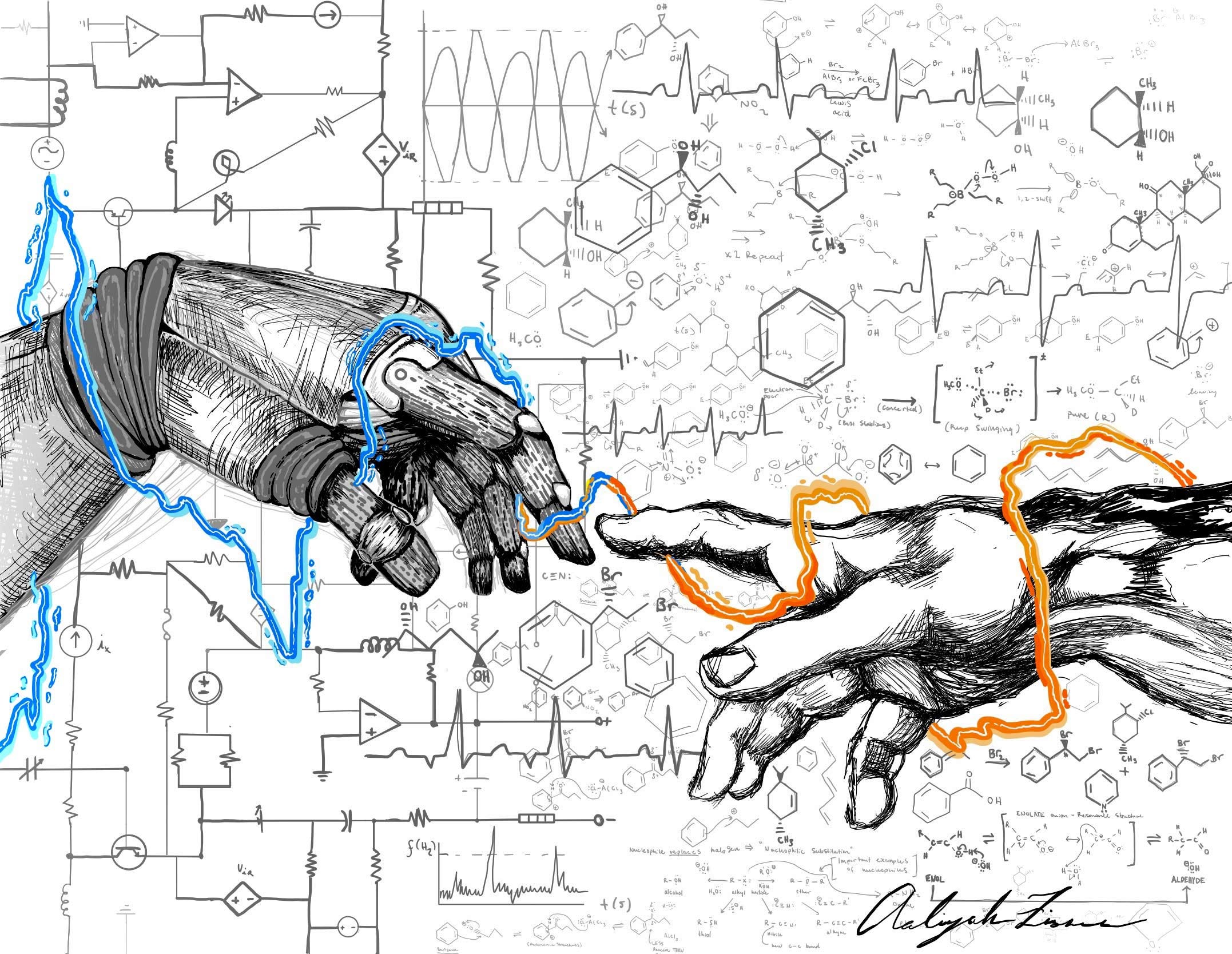
It’s no surprise that aircraft design takes inspiration from the flight dynamics of birds, or that the motion of sea creatures through a large volume of fluid inspires submarine structure and its components. Our efforts towards industrial and technological development are unsurprisingly dependent on drawing inspiration from the source itself: our natural environment.
So essentially, if it is established that we are not an exception to the universal laws of physics and chemistry, then neither are the things we can create. We just have to learn how to work around them, especially when our environment gets unpredictable. Whether we are deep in outer space or deep below the seabed, there are no patents for the universe.
DISCLAIMER: When I say universe, I refer to the complexities of nature and our existence in its sphere. No woo-woo, no magic, just science.
Speaking of unpredictability, I’d like to get slightly technical here. As humans we try to control our environment, but the truth is, many things are entirely out of our grasp. When an offshore drilling rig experiences what’s called a “kick”, this can lead to something between a slight burst of pressure or a full-on blowout. And if you’ve watched Deepwater Horizon (2016), you know just how threatening that can be.

And in the same way that we can’t see what’s happening below the mudline, we don’t always know what’s happening inside our bodies. So whether it’s a blowout on a drilling rig or a ruptured aneurysm in the heart, safety engineering is a broad category that deals with analyzing and studying impact forces such as pressure and collisions in order to protect the integrity of equipment, machinery, and the involved personnel.
This post has been inspired by my exploration of new avenues within my engineering career. I am a biomedical engineering student, have recently started an internship designing subsea intervention systems within the oil and gas industry, and am also in recruitment for a position in designing and performing crash tests for human safety within aircraft.
To that point, everything related to medical devices and mitigating impact forces is really just intervention systems. Crash testing calls for the study of shock absorption and material deformation, just like relief valves and dampeners in offshore risers or implantable joints with a certain yield strength to mitigate stress shielding.
Hydrates occur in offshore drilling pipes, which are crystalline solids that form as a result of water and gas being trapped under high pressure and low temperatures: similar to an arterial blockage, this is a solid material that can impede flow, ultimately compromising either oil production in offshore drilling or efficient blood supply to the brain. In the realm of physics and pressure blockages, both pose a threat to safety.
My work in the oil and gas industry has lead to this question about four times a week: “Biomedical engineering? How did you end up here?” My supervisor simply says, “Well, we hired you for your experience. More than that, it’s all about transferable skills.” And he’s right.
As I reflect on the way my passion for engineering has blossomed, I only find more reasons to dive deeper in this profession and explore more disciplines that seem unrelated. Honestly, I’d be close-minded to refute the idea that concepts from one field of engineering can effectively be used to further research and developement in another.
Anything I can design on SolidWorks might not be much different from a Gray’s Anatomy diagram of a biological system.